Herb and Garlic Pull‑Apart Bread That Is Soft, Savory, and Fast
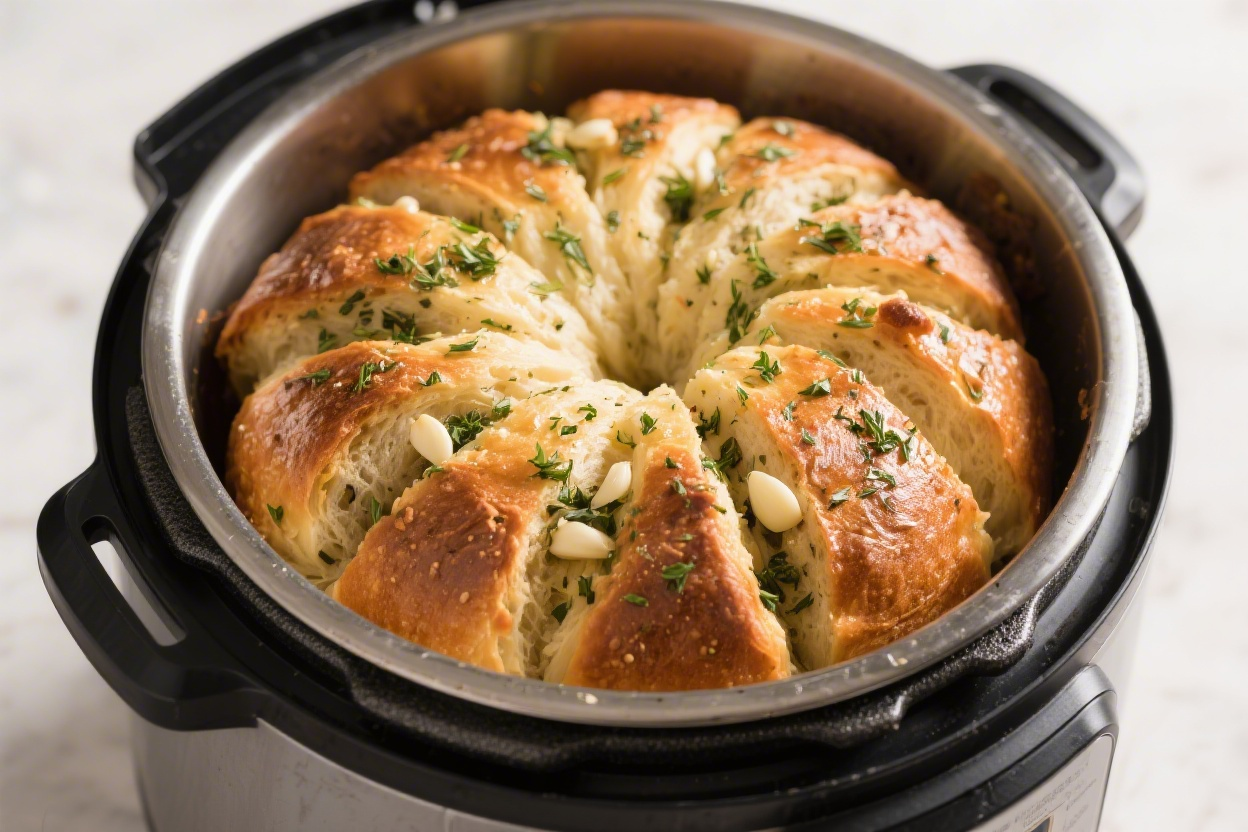
Warm, garlicky pull-apart bread is the kind of thing that makes a meal feel special, even on a weeknight. This version gives you that bakery-style aroma and tender crumb without turning on the oven. The pressure cooker traps steam, helping the dough rise beautifully and bake evenly.
It’s a cozy project that doesn’t take all day, and the result is a pan of buttery, herbed pieces everyone can tear and share. Serve it with soup, pasta, or as a starter with olive oil for dipping.
Why This Recipe Works
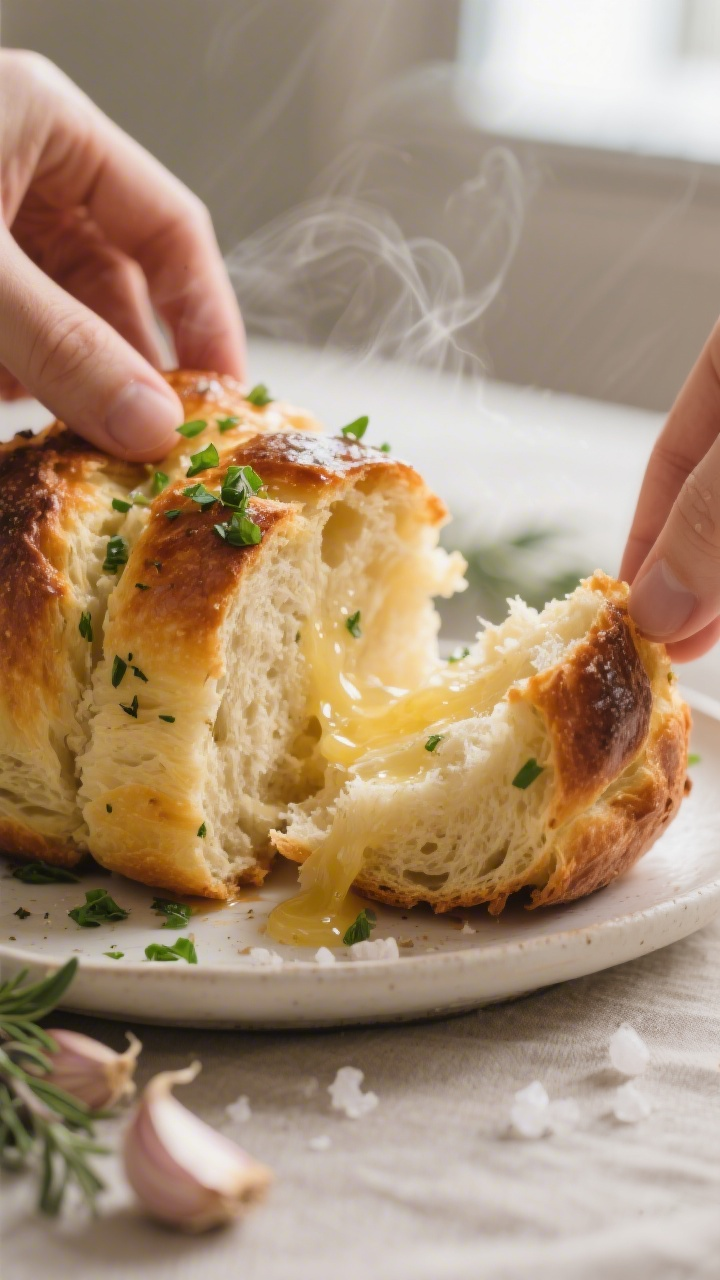
The pressure cooker creates a moist, controlled environment that’s perfect for tender bread. Instead of blasting dry heat like an oven, it uses steam, which keeps the dough soft and helps it cook evenly.
You also proof the dough right in a warm spot, then steam-bake it under pressure for a consistent result. The pull-apart shape exposes plenty of surface area to the herb-garlic butter, so every bite is seasoned and fluffy, not dense.
Ingredients Shopping List
- All-purpose flour (3 cups / 375 g)
- Warm water (1 cup / 240 ml, about 105–110°F)
- Granulated sugar (1 tablespoon)
- Active dry yeast (2 1/4 teaspoons, one packet)
- Kosher salt (1 1/2 teaspoons)
- Unsalted butter (6 tablespoons, melted, plus more for greasing)
- Olive oil (1 tablespoon)
- Fresh garlic (3–4 cloves, minced)
- Fresh herbs (2–3 tablespoons chopped; parsley, chives, thyme, or rosemary)
- Grated Parmesan (optional, 2 tablespoons)
- Flaky sea salt (optional, for finishing)
- Cooking spray or extra butter (for the pan)
- Parchment paper (to line the pan, optional)
Instructions
- Proof the yeast. In a mixing bowl, combine warm water and sugar. Sprinkle the yeast on top, stir gently, and let it sit for 5–8 minutes until frothy.If it doesn’t foam, start over with fresh yeast and check your water temperature.
- Make the dough. Add 2 1/2 cups of flour, salt, and olive oil to the yeast mixture. Stir with a spoon or dough whisk until it forms a shaggy dough. Add more flour, a tablespoon at a time, until the dough is soft and slightly tacky but not sticky.
- Knead until smooth. Turn the dough onto a lightly floured surface and knead for 6–8 minutes, or mix with a dough hook for 4–5 minutes.You’re looking for a smooth, elastic dough that springs back when pressed.
- First rise. Place the dough in a lightly greased bowl, cover, and let rise in a warm spot until doubled, about 45–60 minutes. If your kitchen is cool, turn on your pressure cooker to “Keep Warm” for a few minutes and set the covered bowl nearby to help it along.
- Prepare the herb-garlic butter. Melt the butter and stir in minced garlic and chopped herbs. Add the Parmesan if using.Reserve 1–2 tablespoons for brushing after cooking.
- Shape the dough. Punch down the risen dough and divide it into 24–28 equal pieces. Roll each piece into a ball. Toss the balls in the herb-garlic butter to coat well.
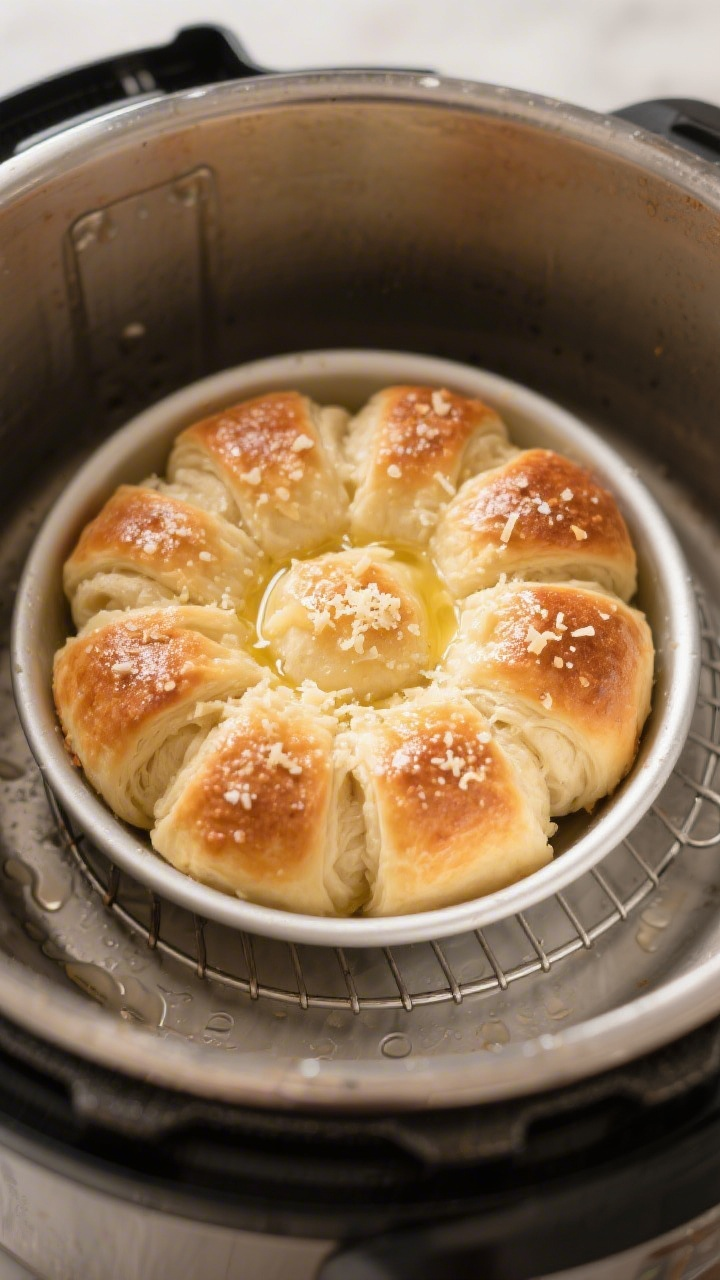
- Pan it up. Line and grease a 7-inch round cake pan or a similar pressure-cooker-safe pan.Arrange the coated dough balls snugly in a single layer, then pile any remaining balls on top to create a slightly domed, pull-apart effect. Drizzle over any leftover butter mixture.
- Second rise. Cover the pan loosely and let the dough rise again for 20–30 minutes, until puffy. Meanwhile, pour 1 1/2 cups of water into the pressure cooker and set in the trivet.
- Pressure cook. Cover the pan tightly with foil to prevent condensation.Place it on the trivet, seal the lid, and cook on High Pressure for 25 minutes. Allow a 10-minute natural release, then vent any remaining steam.
- Optional browning. For a golden top, remove the foil and brush with a little butter, then place under a hot broiler for 2–4 minutes, watching closely. If you don’t want to broil, brush with the reserved butter for a soft sheen and sprinkle flaky salt.
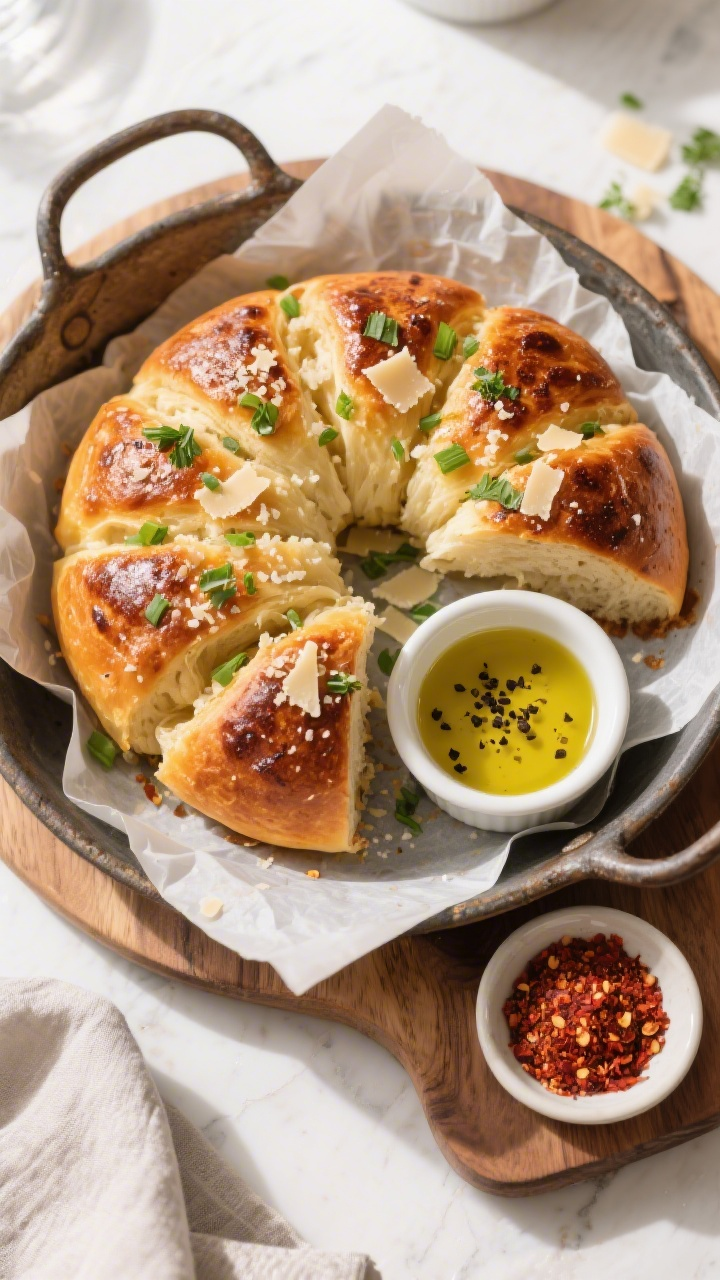
- Rest and serve. Let the bread cool in the pan for 10 minutes, then lift it out and serve warm.Pull apart at the table and enjoy.
Storage Instructions
- Room temperature: Wrap tightly or store in an airtight container for up to 2 days. Rewarm briefly in a low oven or microwave to refresh.
- Refrigerator: Not ideal, as it can dry out bread. If needed, wrap well and use within 3 days.
- Freezer: Cool completely, wrap in foil, and place in a freezer bag for up to 2 months.Reheat from frozen in a 325°F oven, wrapped, for 15–20 minutes.
- Leftover tip: Cube and toast any leftovers for garlicky croutons.
Benefits of This Recipe
- Oven-free baking: Great for hot days, small kitchens, or when your oven is busy.
- Soft, tearable texture: Steam creates a tender crumb that’s perfect for pull-apart bread.
- Flexible timing: The dough is forgiving and can tolerate slightly longer rises.
- Big flavor, simple steps:</-strong> Everyday ingredients, bold herb and garlic payoff.
- Party-friendly: Easy to share, and it pairs with almost anything.
What Not to Do
- Don’t skip the foil cover. Without it, condensation can make the top soggy.
- Don’t overflour the dough.</-strong> Too much flour makes the bread dense. Aim for slightly tacky, not dry.
- Don’t rush the rises. Underproofed dough won’t puff evenly and can taste yeasty.
- Don’t forget water in the pot. The pressure cooker needs steam to cook properly.
- Don’t walk away from the broiler. It can go from golden to burnt in seconds.
Recipe Variations
- Cheesy Pull-Apart: Add 1/2 cup shredded mozzarella or cheddar between layers and sprinkle Parmesan on top after cooking.
- Lemon-Herb: Add 1 teaspoon lemon zest to the butter mixture and finish with a squeeze of lemon juice before serving.
- Spicy Garlic: Stir in 1/2 teaspoon crushed red pepper flakes or a pinch of cayenne to the butter.
- Herb Blend Swap: Use Italian seasoning, za’atar, or herbes de Provence in place of fresh herbs.
- Whole-Wheat Twist: Replace 1 cup of all-purpose flour with whole-wheat flour and add 1 teaspoon honey. Expect a slightly heartier crumb.
- Vegan Option: Use vegan butter and confirm your sugar is vegan-friendly.The method stays the same.
FAQ
Can I use instant yeast instead of active dry yeast?
Yes. Use the same amount and mix it directly with the flour and salt. Skip the proofing step but keep the warm water.
The dough should rise slightly faster, so start checking 10 minutes earlier.
What size pan works best in a pressure cooker?
A 7-inch round cake pan or springform pan is a common fit for most 6-quart models. For 8-quart cookers, you can sometimes fit an 8-inch pan; increase dough by about 25% and add 3–5 minutes to the pressure time.
My bread is pale on top. Did I do something wrong?
No.
Pressure cooking won’t brown the top. For color, use the broiler for a couple of minutes or a countertop torch. Otherwise, brush with butter and sprinkle herbs or Parmesan for a pretty finish.
How do I know the bread is done?
The pieces should feel set and springy, not doughy, and the internal temperature should be around 195–200°F.
If it’s underdone, re-cover with foil and pressure cook for 3–5 more minutes with a quick release.
Can I make the dough ahead?
Yes. After the first rise, punch down, shape into balls, and refrigerate up to 12 hours. Toss in butter, arrange in the pan, let it come to room temperature and puff, then pressure cook as directed.
Can I use dried herbs?
Yes.
Use about one-third the amount of fresh. For example, 1 teaspoon dried parsley plus 1/2 teaspoon dried thyme works well. Bloom dried herbs in the warm butter to wake up their flavor.
What if I don’t have a trivet?
Make a DIY rack with a ring of crumpled foil to lift the pan off the bottom.
You just need at least 1/2 inch of clearance so water can circulate and create steam.
In Conclusion
Herb and Garlic Pull‑Apart Bread in a pressure cooker delivers soft, flavorful pieces in a fraction of the time. The method is simple, the ingredients are familiar, and the results feel special. Once you try it, you’ll reach for this technique anytime you want fresh bread without heating up the oven.
Keep the butter handy—this one disappears fast.
Printable Recipe Card
Want just the essential recipe details without scrolling through the article? Get our printable recipe card with just the ingredients and instructions.